Passenger Lists
(noun) a document listing the cargo, passengers, and crew of a ship, aircraft, or vehicle, for the use of customs and other officials.
About Passenger Lists
There is NO central repository for passenger lists.
IMPORTANT: These files are for personal use only! The use of the information on this site for commercial, political, or any other purpose other than research of your family history and genealogy is strictly forbidden.
Please contact the CGC and obtain credit before using any part of this collection by emailing secretary@cubangenclub.org.
Citing online registries/information requires documenting the creator, record title, date, website name, URL, and access date to establish provenance. Effective citations for genealogy websites should include the specific database, collection name, and direct image links for the individual’s record.
Libros de Embarque a Cuba Desde el Puerto de Gijon - 1858
Gijon is a coastal city in northern Spain, on the Bay of Biscay. It’s the largest city in the autonomous community of Asturias, located about halfway along the region’s coast. It was the port of departure of thousands of Asturians and Cantabrians.
Note: Use the Index below to locate the particular image for your ancestor PRIOR to accessing the “Libros de Embarques”
Source: The official website of the city of Gijón in Spain – “Ayuntamiento de Gijón”
https://www.gijon.es/es
Books of Passage to Cuba - Pérez y Compañía - 9 volumes (1900-1960)
Libros de Embarque a Cuba de la Compañía Pérez y Compañía – 9 tomos (1900-1960)
More than 400 sheets with thousands of passengers destined for Havana, among other destinations.
Can be accessed at Archivo Historico, Universidad de Cantabria
CubaGenWeb
-the individual’s name
-ship’s name
-date of voyage/arrival
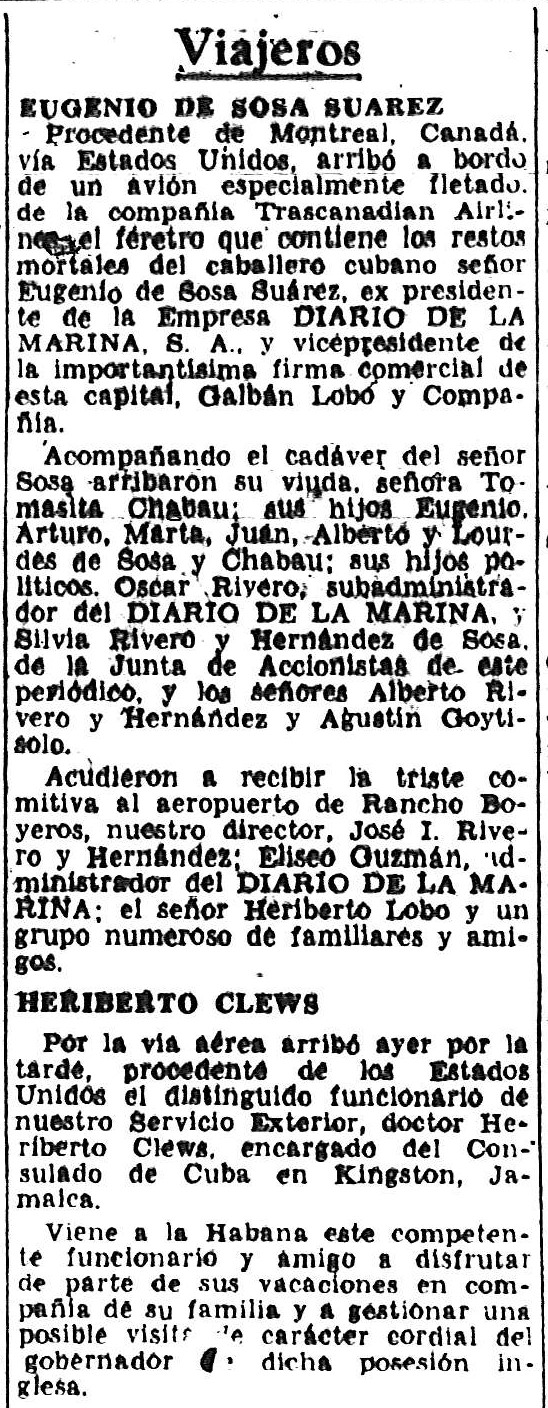
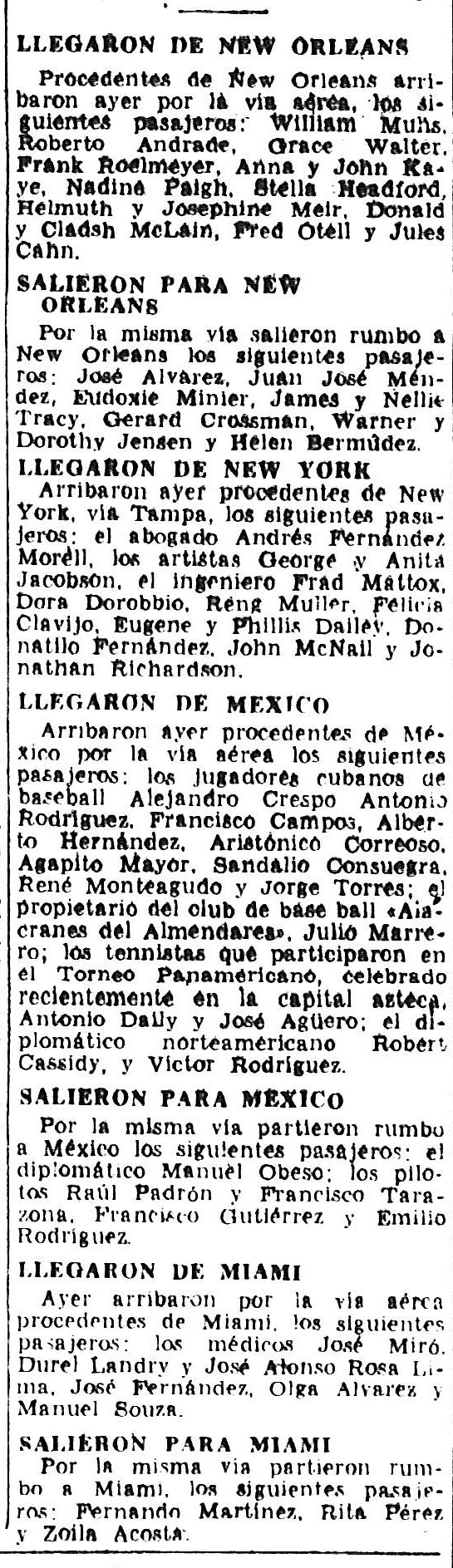
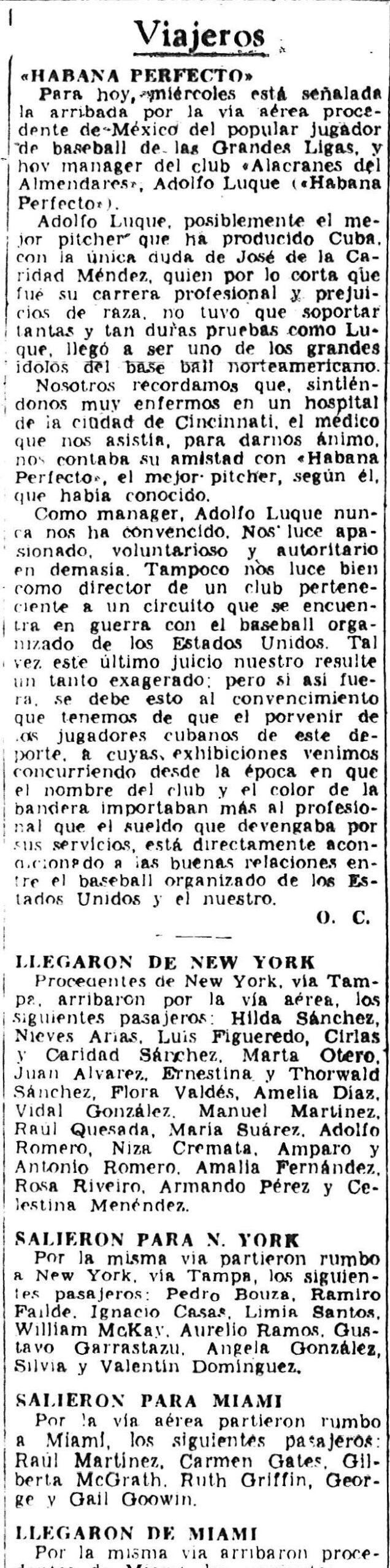
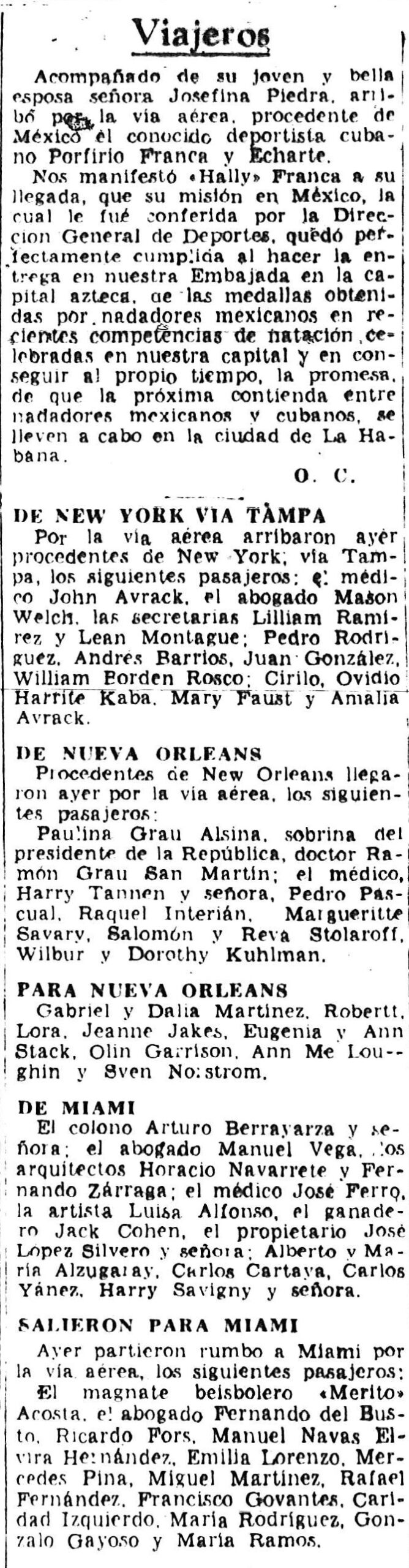
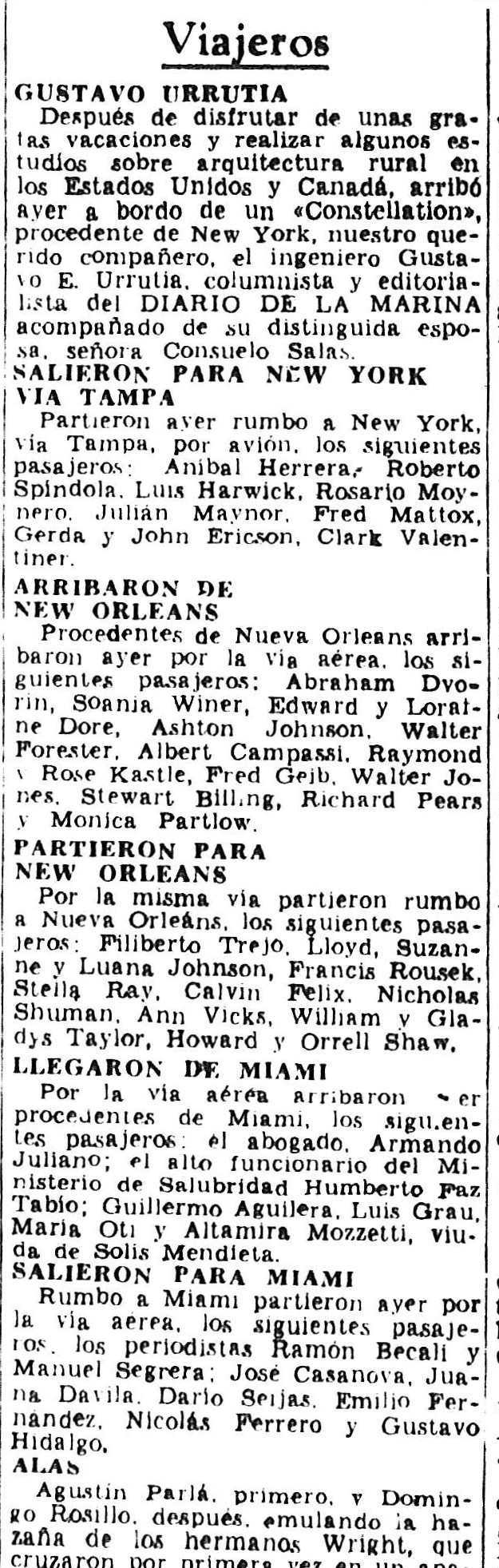
Diario de la Marina Newspaper
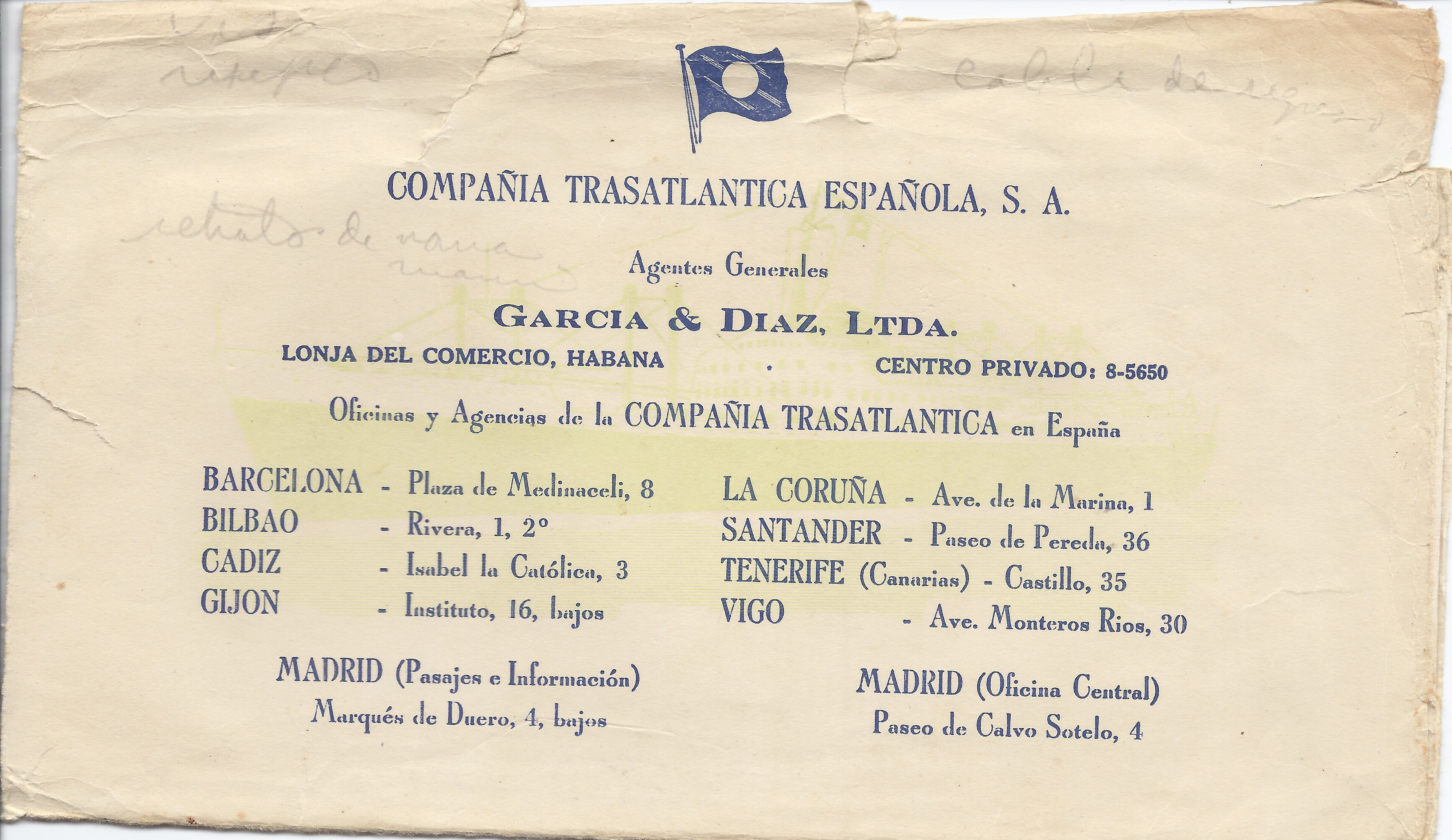
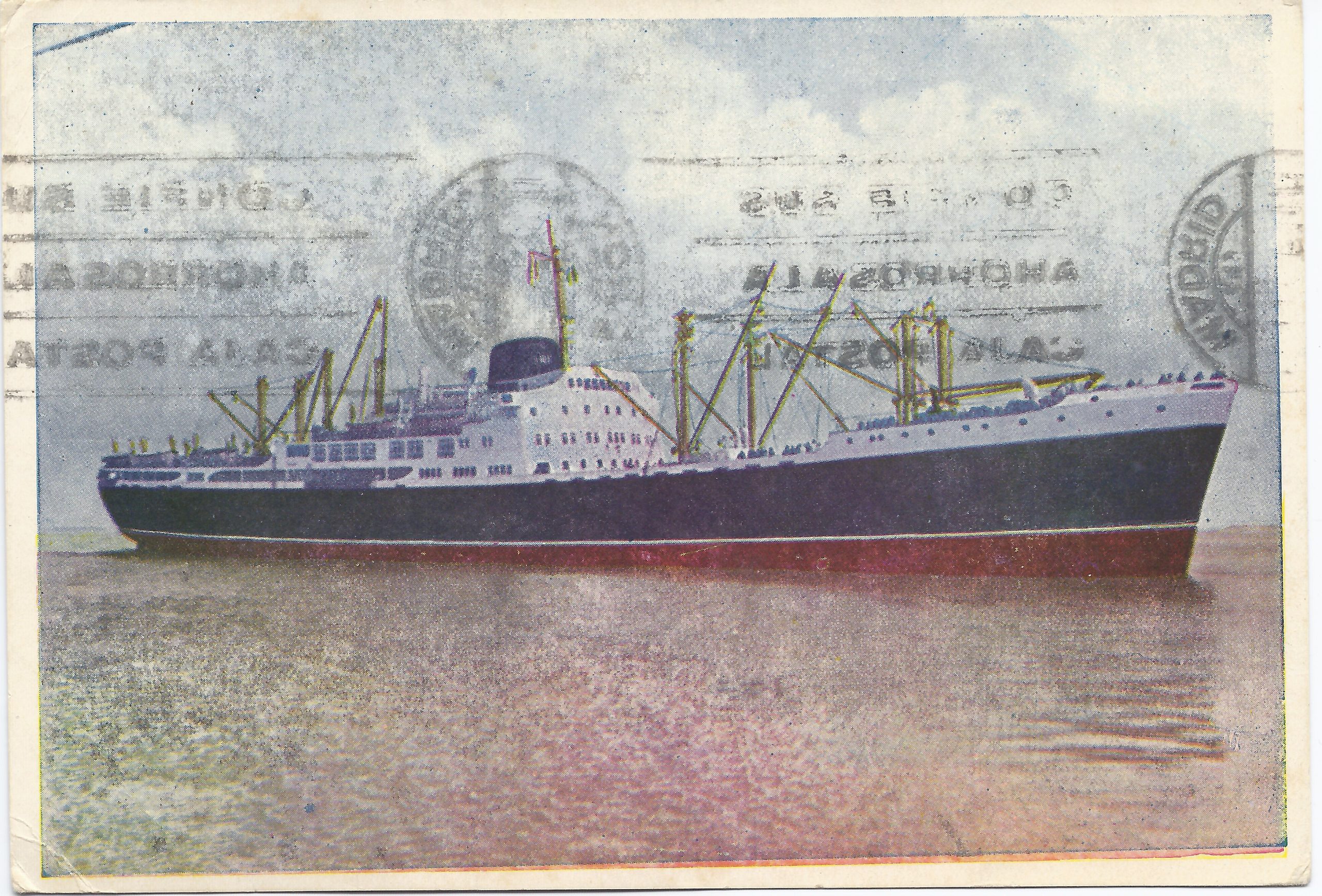
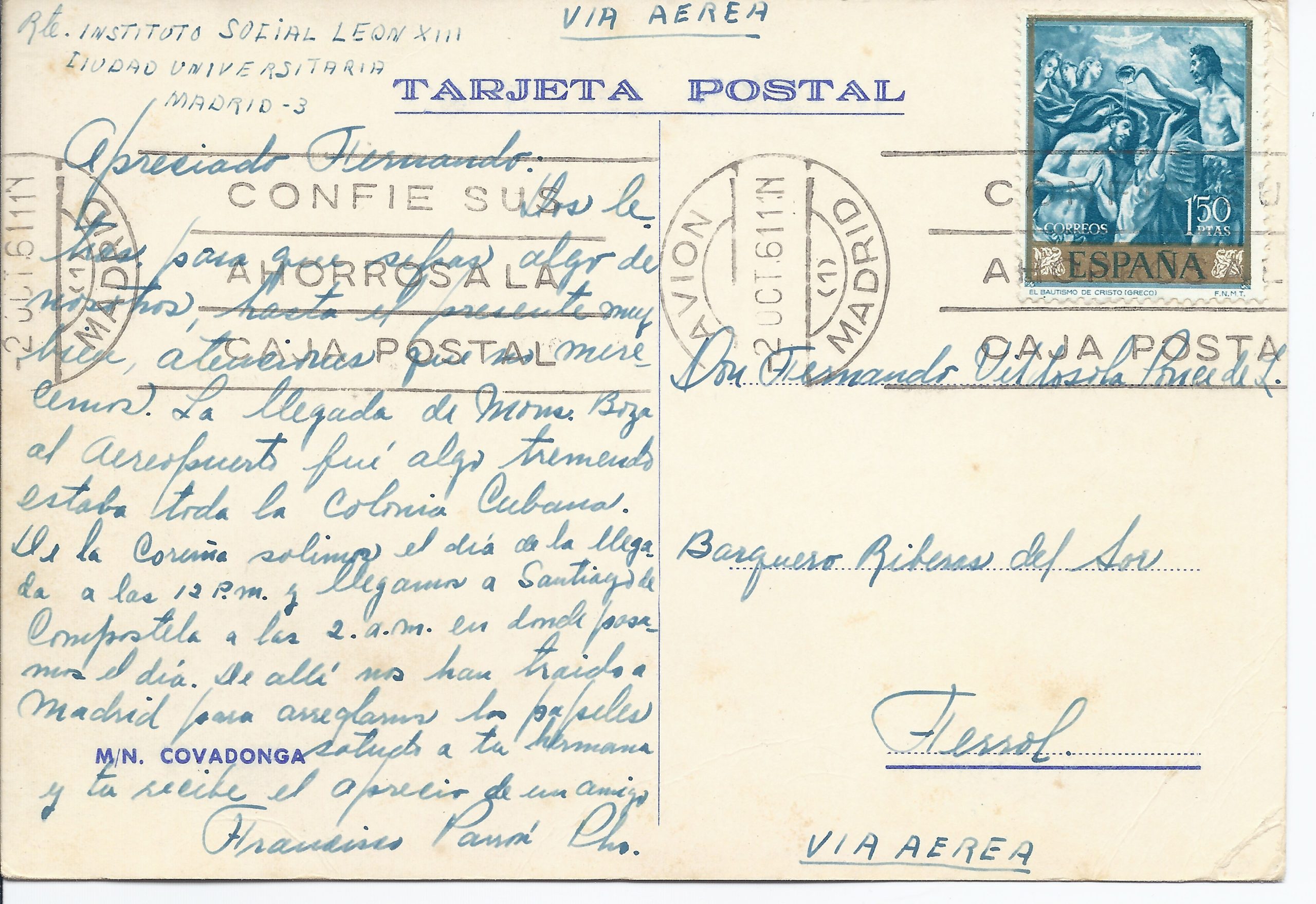
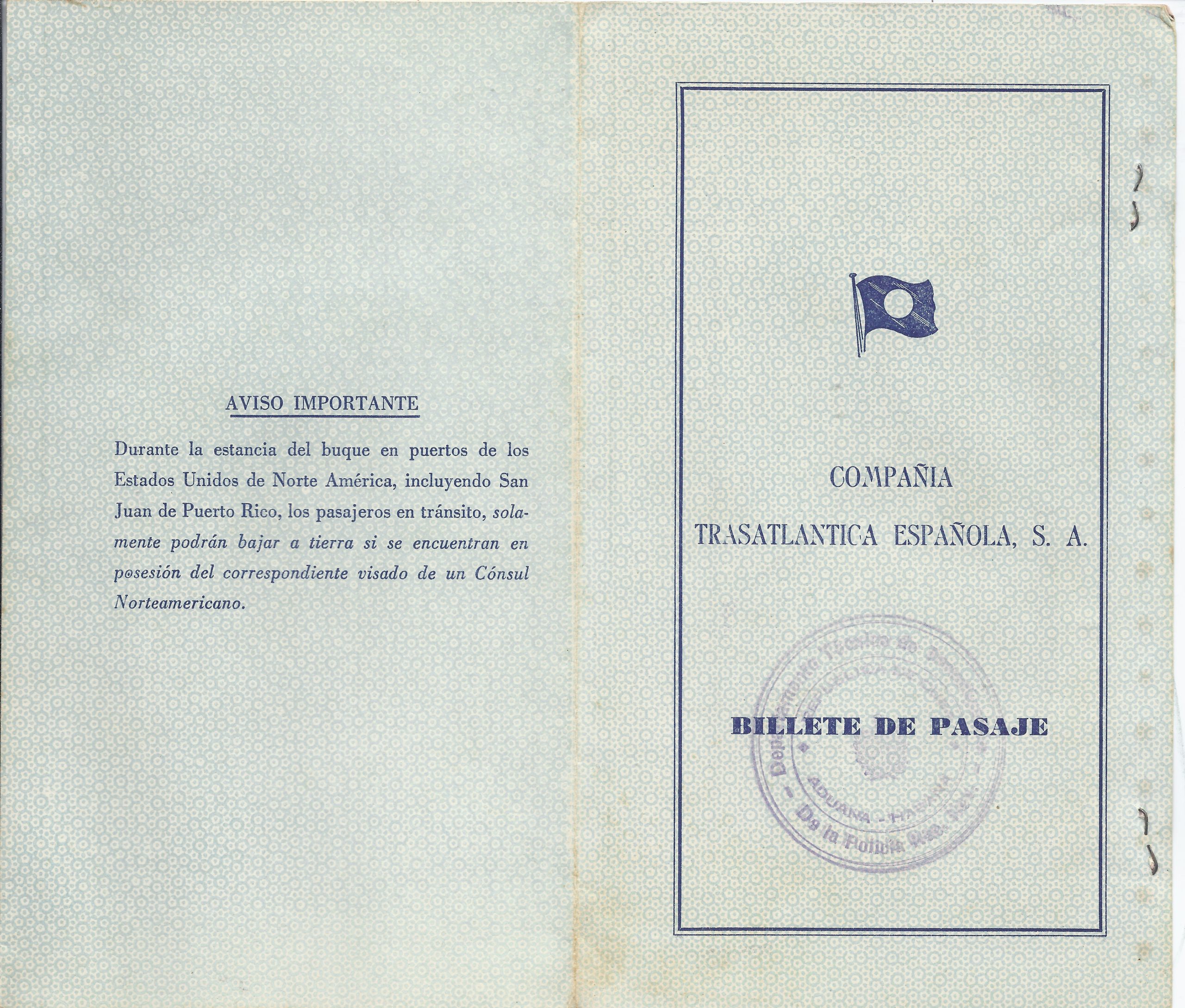
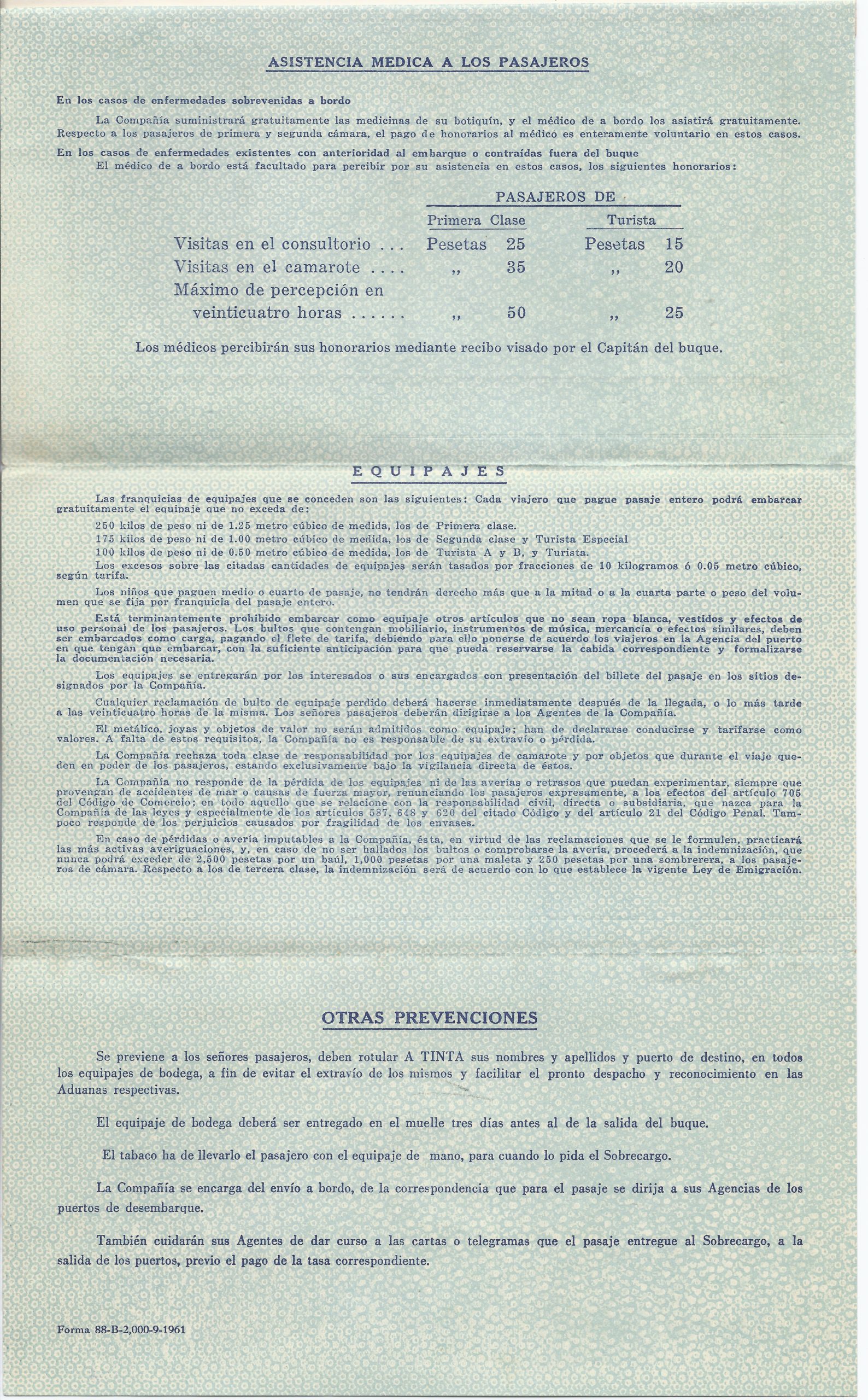
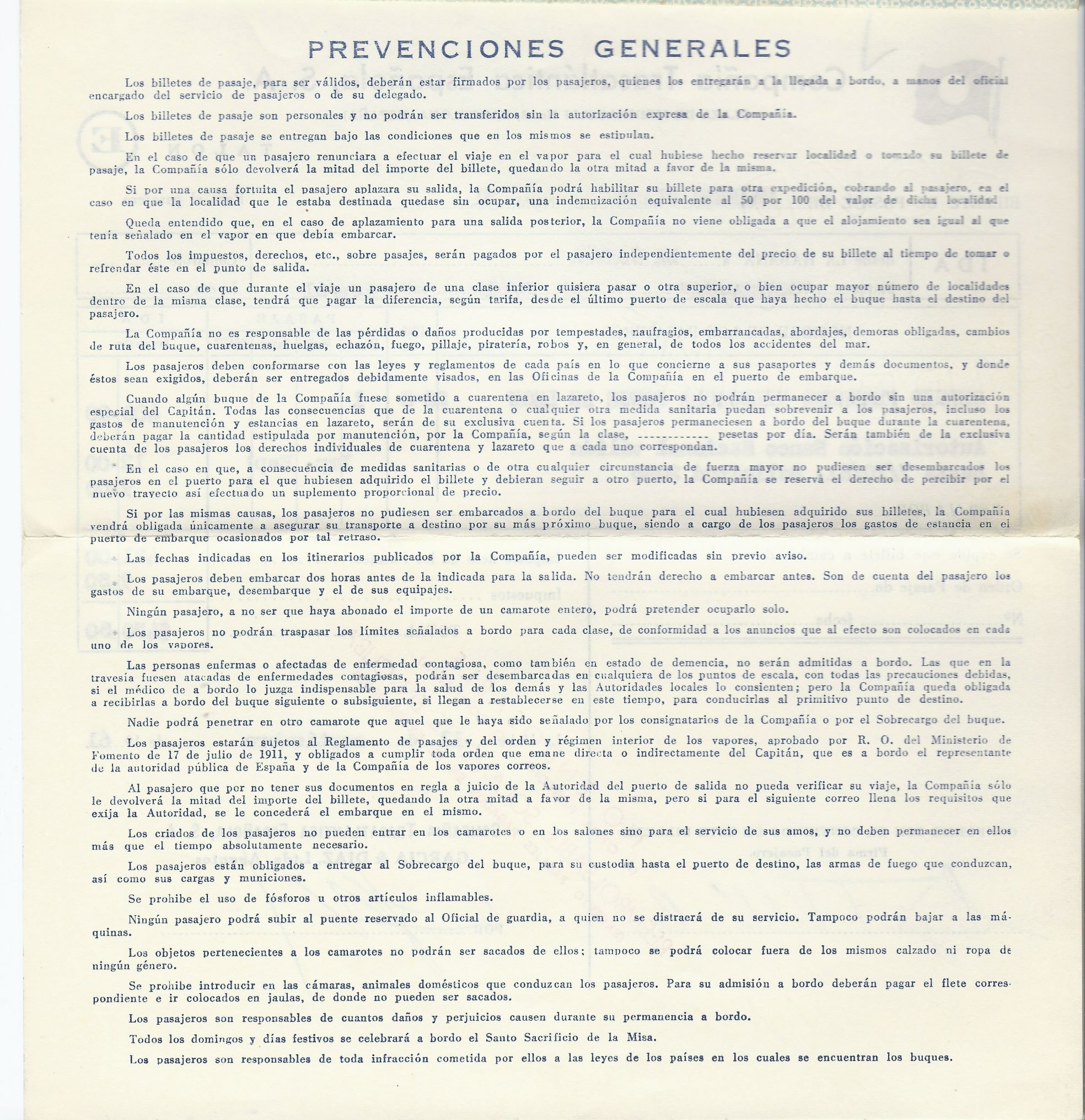
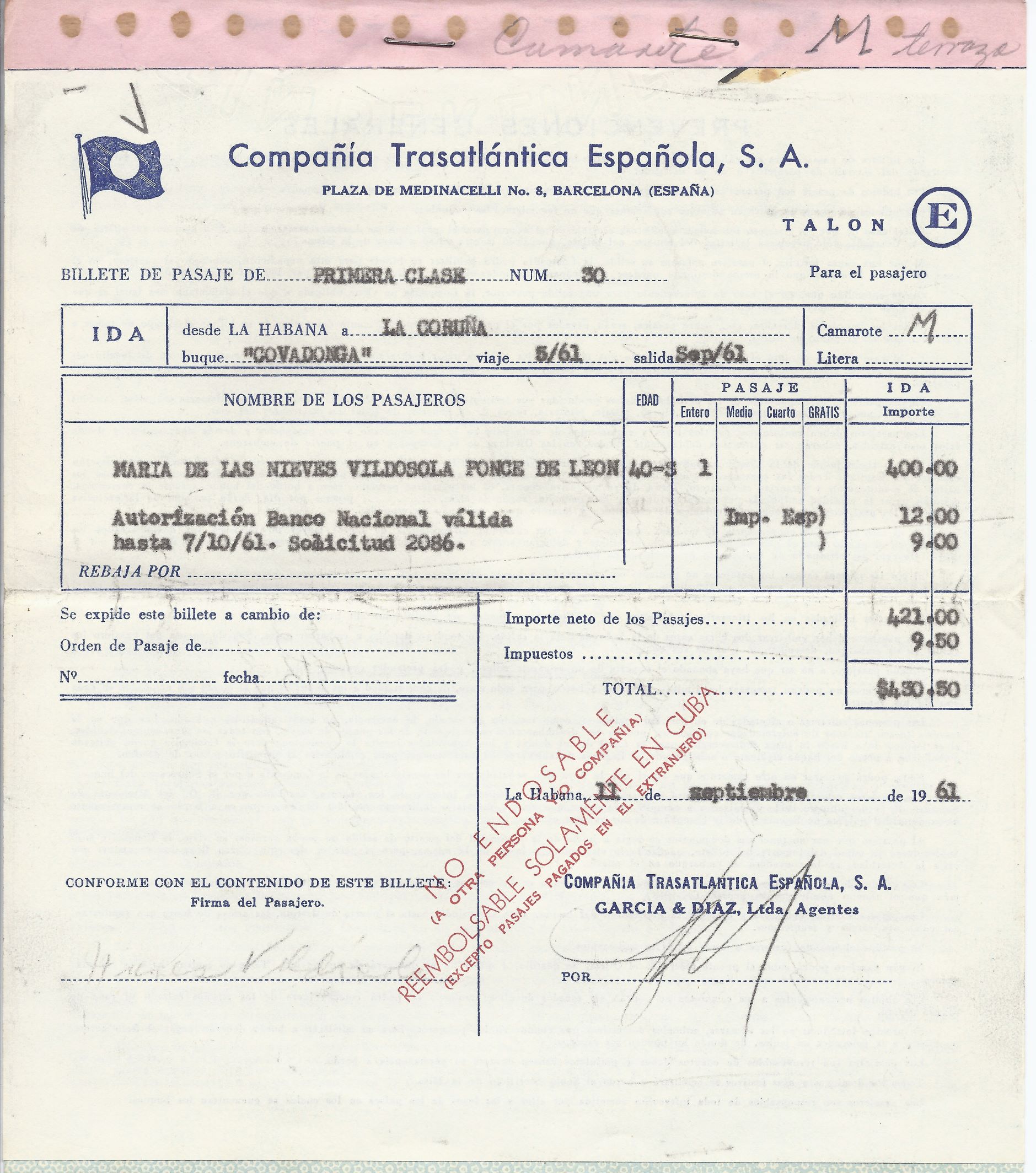
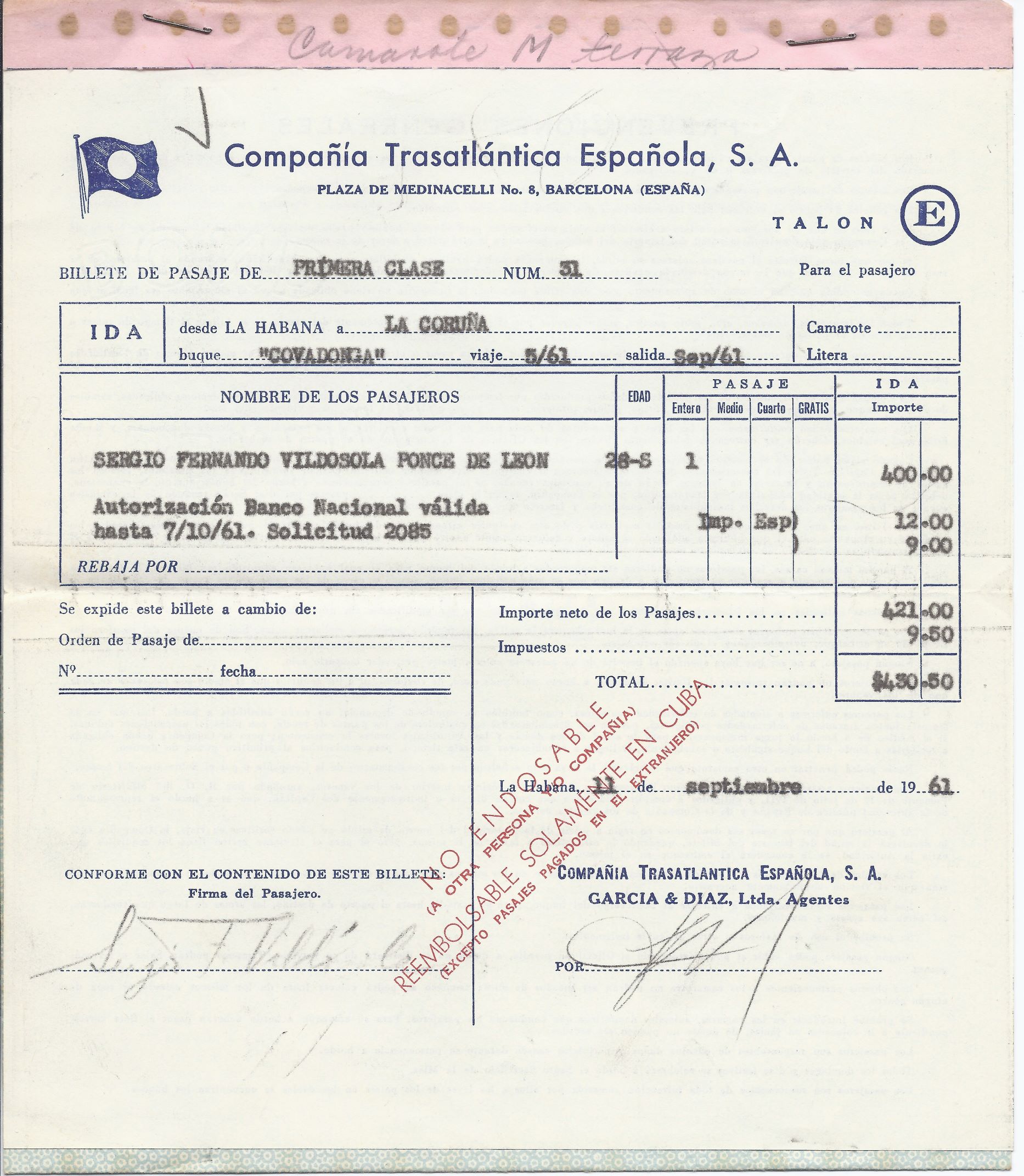
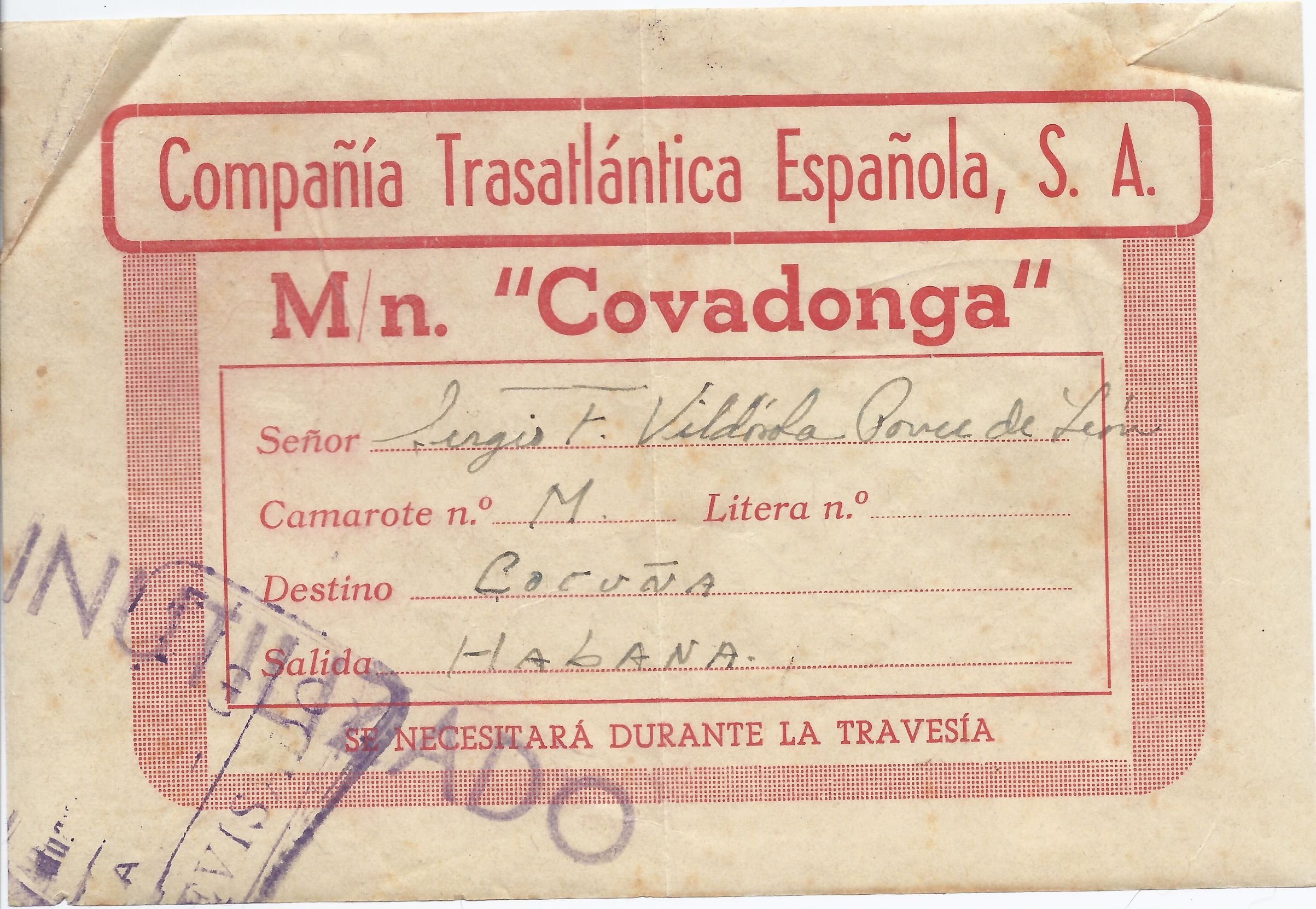
Compañía Trasatlántica Española, S.A. M/N Covadonga
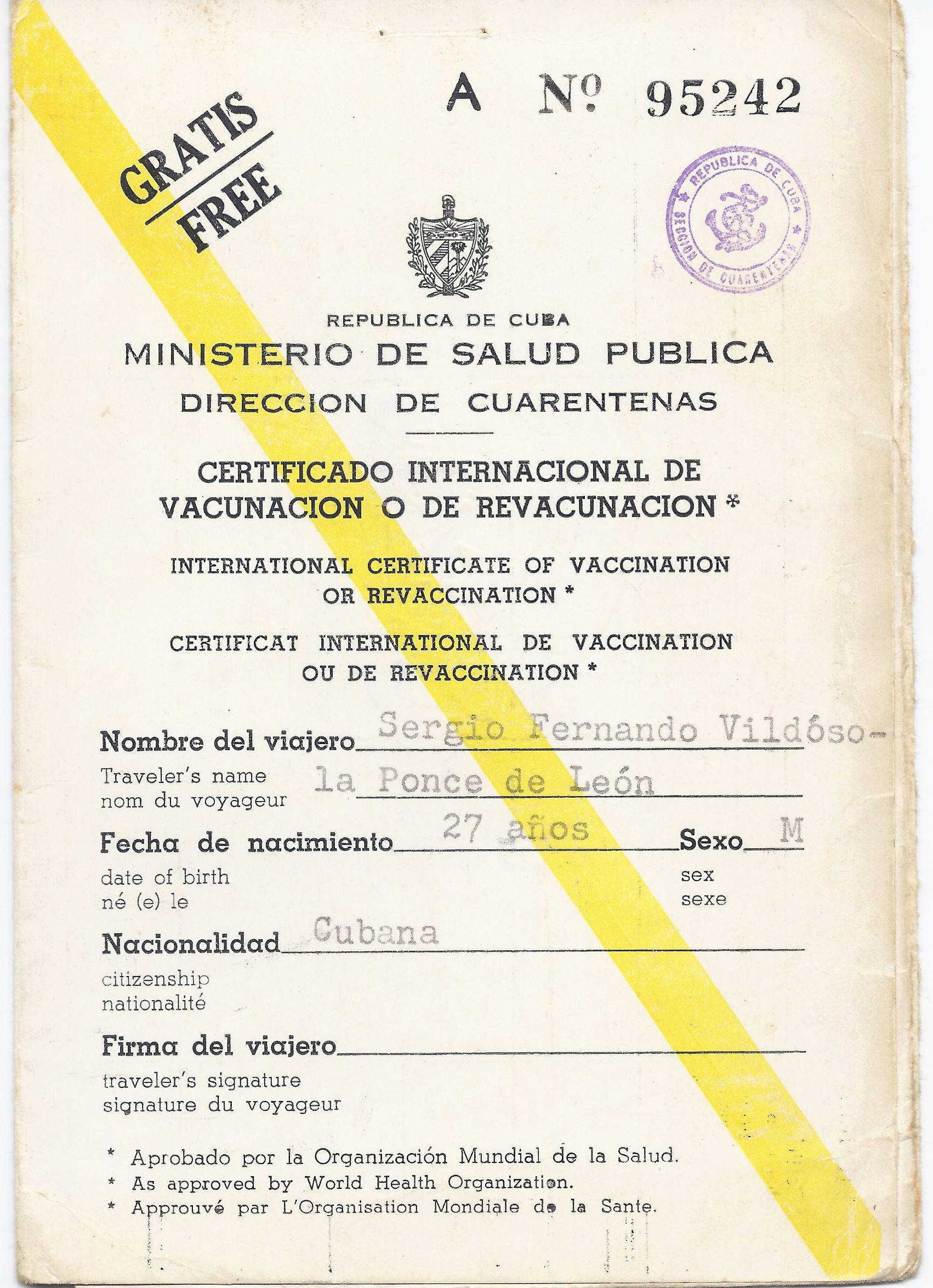
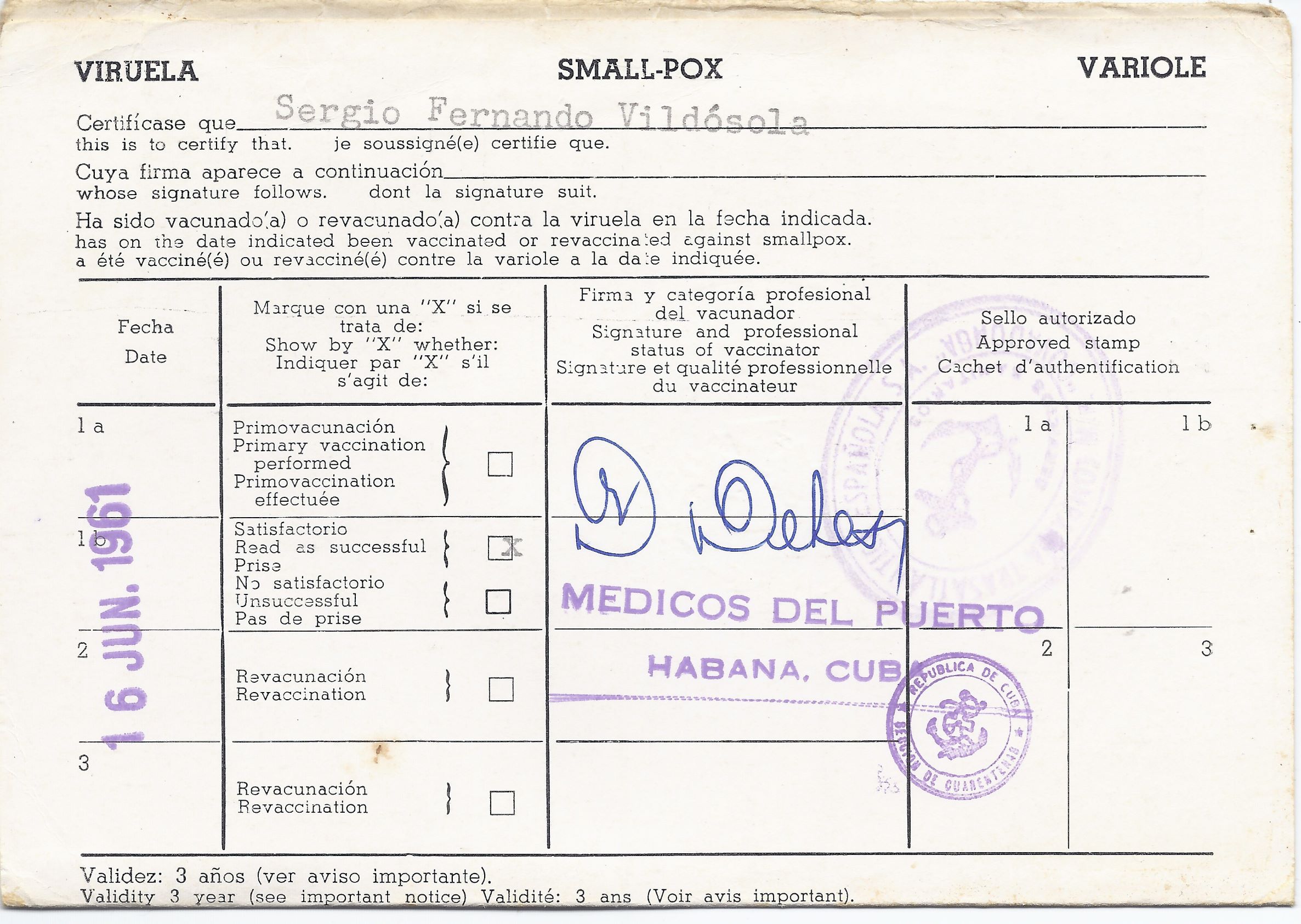
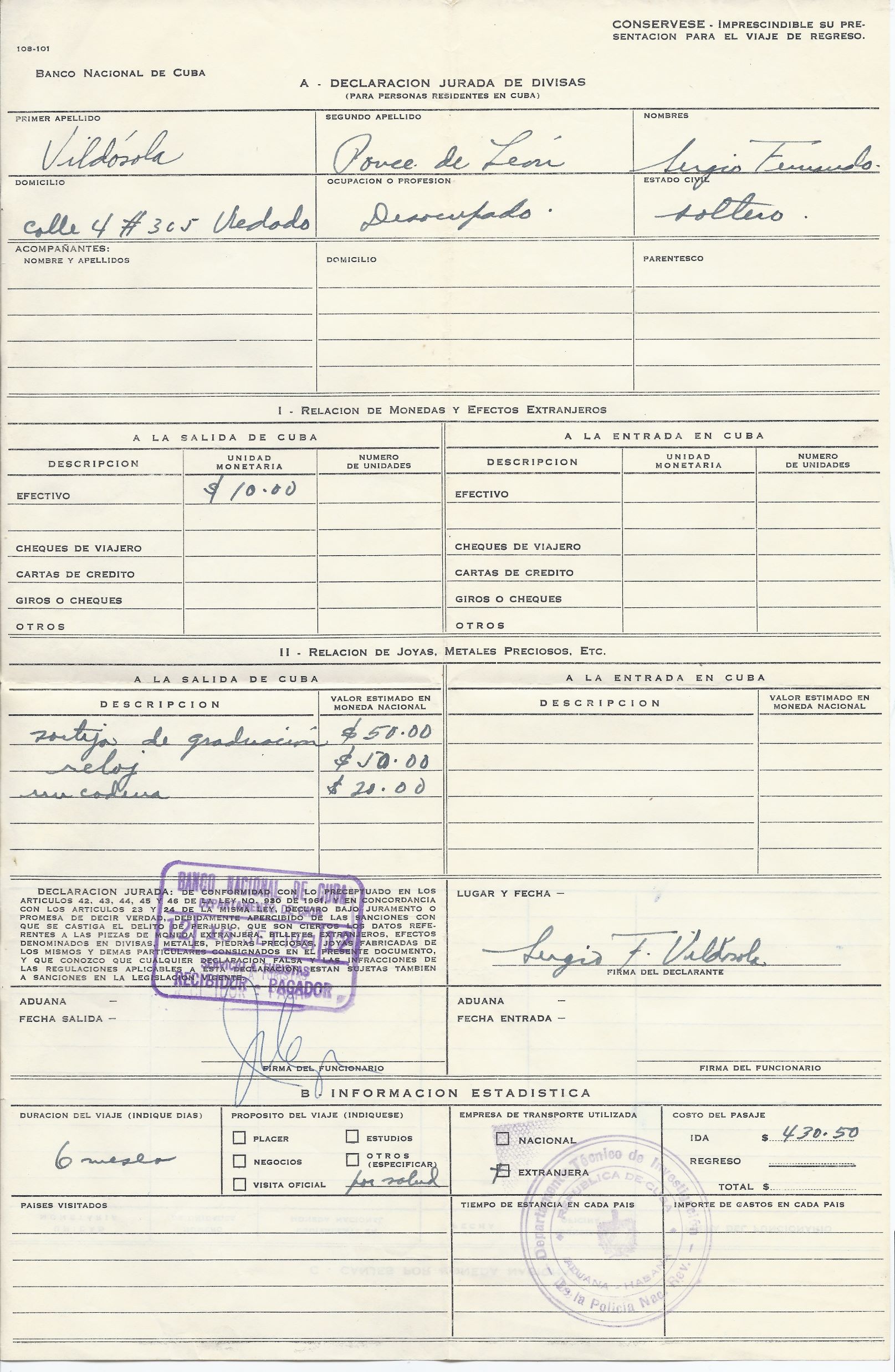
Family documents donated by CGC 2nd Vice-President, Jose Ignacio Vildósola, for a 1961 sailing of the M/N Covadonga
Sources:
Family documents for 1961 voyage – CGC 2nd Vice-President, Jose Ignacio Vildósola
Menus and passenger list for 1967 – www.buques.com
The Cuban Boatlift from Mariel
The “Mariel Boatlift” constituted a significant episode of mass migration in which Cubans departed from Mariel Harbor for the United States between April 15 and October 31, 1980. The individuals involved in this migration are commonly designated as Marielitos in both Spanish and English usage. Although the immediate catalyst for the exodus was the severe economic deterioration then affecting Cuba, the movement also represented a continuation of broader migratory patterns established by successive waves of Cuban immigrants to the United States during the preceding decades.
Refugees were initially processed in camps established throughout the greater Miami area, many of them located at decommissioned missile defense sites. Additional facilities were set up at the Miami Orange Bowl and at various local churches. Some sites functioned as holding centers, where refugees were temporarily segregated until they could undergo preliminary processing at locations such as the Nike–Hercules bases in Key Largo and on Krome Avenue. After being documented and registered, refugees were transferred to larger compounds in the metropolitan area, where they could reunite with relatives already living in the United States and connect with social-service organizations, including Catholic Charities and the American Red Cross. These regional resettlement centers became central to the social and cultural negotiation of the Mariel Cubans’ status and acceptance.
Due to severe overcrowding in South Florida’s immigration facilities, federal authorities relocated large numbers of Marielitos to other processing centers, including Fort Indiantown Gap, Fort McCoy, Camp Santiago in Puerto Rico, and Fort Chaffee.
The Miami Herald developed a searchable online database of Mariel boatlift refugees in 2010 to mark the 30th anniversary of the exodus. Although the database was originally hosted on the newspaper’s website, it is no longer accessible there, and the discontinuation has rendered the full dataset difficult to obtain. Portions of the information, however, have been preserved by independent users on third-party platforms.
The database emerged from a five-month research initiative that consolidated multiple government sources. It integrated an extensive U.S. government roster of more than 130,000 Cuban exiles who arrived in Key West with a register of over 1,600 vessels used during the boatlift. The project drew on diverse sources, including U.S. Coast Guard documentation and the arrival log maintained by Key West exile Arturo Cobo.